Surfaces Shaped for Drainage and Stability
Grading / Dirt Work in Jasper for uneven terrain limiting construction and property function
Hills, slopes, and varied elevations throughout North Georgia create terrain that pools water, erodes during storms, and prevents level construction surfaces without grading. Reshaping uneven ground improves drainage, creates stable pads for buildings and equipment, and reduces future erosion that undermines driveways, foundations, and agricultural structures. Blackstone N Sons performs grading and dirt work that prepares sites for homes, mobile homes, barns, equipment yards, and driveways where precision equipment operation and attention to finish elevations determine whether completed projects drain correctly or require expensive rework.
The work involves cutting high spots, filling low areas, and sloping surfaces to direct runoff away from structures and toward drainage paths. Finish grades must support compaction, prevent standing water, and meet building code requirements for foundation drainage and accessibility.
Schedule a consultation to discuss grading and dirt work estimates for your property.
The Difference Between Rough Grading and Finish Work
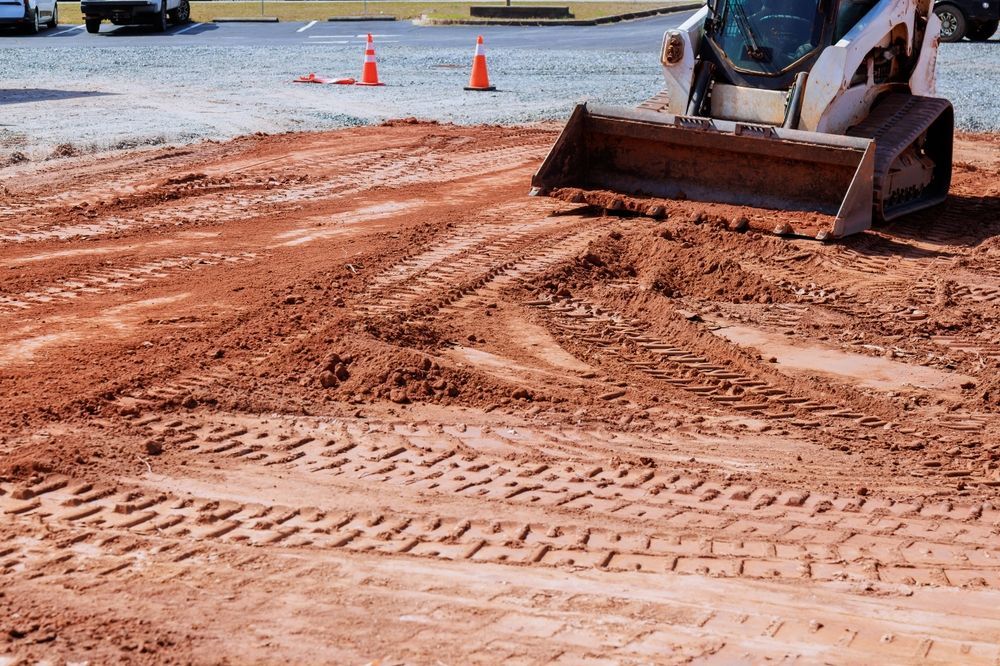
Rough grading establishes overall site elevations, removes major irregularities, and creates general drainage flow, while finish grading refines surfaces to within inches of final elevations needed for construction. Equipment operators use laser levels or GPS systems to verify slope percentages and ensure pads are level within tolerances that prevent concrete slabs from cracking or metal buildings from racking out of square. Material selection matters—native soil may compact adequately for driveways, but building pads often require imported gravel or crusher run that provides stable support without settling.
Once grading is complete, you see level building footprints ready for foundation work, driveways that slope toward drainage swales instead of toward garage doors, and yard areas that shed water during rain events without forming gullies. Equipment can be parked on compacted surfaces that do not rut under load, construction materials can be stacked on stable ground, and landscaping starts from controlled elevations rather than random high and low spots.
Grading for residential construction differs from grading for agricultural use because homes require tighter elevation control and finished appearance, while farms prioritize functional drainage and equipment access over aesthetic smoothness. Mobile home pads need precise levelness to prevent frame stress, while barn sites may tolerate slight slopes if drainage is managed. Driveways require compacted bases and crowned surfaces to shed water, and equipment yards need hardened areas that resist rutting under repeated heavy loads.
Questions Before Starting Your Project
Property owners preparing sites for construction or improving existing land typically ask about grading methods, material requirements, and long-term performance.
What is the difference between cut and fill in grading work?
Cut removes soil from high areas to lower elevations, while fill adds material to low spots, and balanced grading minimizes the need to import or export dirt by moving material within the site.
How does grading prevent water from pooling near foundations?
Finish grades slope away from buildings at a minimum of two percent, directing runoff toward drainage swales, culverts, or natural low points that carry water off the property without erosion.
When should grading happen relative to other site improvements?
Rough grading occurs after land clearing and before excavation, while finish grading happens after utilities are installed but before driveways, walkways, or landscaping are completed.
Why do slopes in Pickens County require careful grading to prevent erosion?
Rainfall events common in North Georgia generate significant runoff on sloped terrain, and uncontrolled water flow creates gullies, undercuts driveways, and washes topsoil downhill unless grading directs flow to stable drainage paths.
What material is best for building pads that will not settle?
Crusher run or ABC stone compacts tightly and resists movement under load, providing stable support for concrete slabs and metal buildings, while native clay or topsoil may compress unevenly and cause structural problems.
Blackstone N Sons applies precision equipment operation and attention to site requirements to deliver grading and dirt work throughout Pickens County. Request an estimate to review your grading needs and discuss material options for your project.