Brush Control Without Hauling or Burning
Forestry Mulching in Jasper for farms, hunting properties, and acreage requiring vegetation management
Large wooded tracts common throughout North Georgia often contain undergrowth and unwanted saplings that block access, reduce visibility, and prevent land use for agriculture or recreation. Forestry mulching processes brush, small trees, and vegetation into natural ground cover that decomposes on-site without requiring burn piles or debris hauling. Blackstone N Sons uses this method to improve usability on properties where traditional clearing would disturb topsoil, create erosion risk, or leave behind unsightly stump fields that complicate mowing and planting.
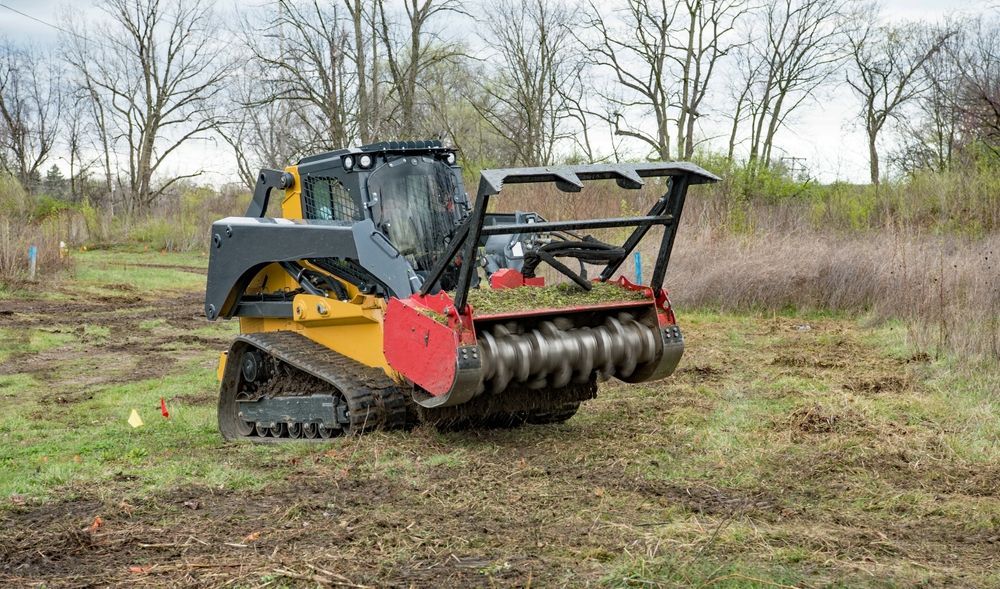
The process involves a drum or disc head with cutting teeth that shreds vegetation into mulch as the machine moves across the land. Material is processed in place rather than uprooted, which leaves root systems intact to prevent soil erosion on slopes. Applications include trail corridors, pasture restoration, hunting lane creation, and perimeter clearing for fire breaks or boundary access.
Request a forestry mulching consultation to evaluate vegetation density and discuss project goals for your property.
What You Notice Once Forestry Mulching Is Finished
Mulching removes the vertical vegetation that blocked sight lines and limited movement, leaving a processed layer of organic material spread evenly across the ground. The mulch layer suppresses regrowth by blocking sunlight to seeds and roots, reducing the frequency of future maintenance compared to mowing or repeated brush hogging. Properties with heavy bramble cover, invasive species, or dense sapling stands transform into open areas where vehicles can travel, livestock can graze, or trails can be walked without machete work.
After mulching, you see clear access routes between property sections, improved visibility for wildlife observation or security monitoring, and ground surfaces ready for seeding or planting without additional soil preparation. Pastures reclaim acreage lost to woody encroachment, hunting properties gain shooting lanes and equipment paths, and recreational land becomes accessible for ATVs or hiking. The mulch layer decomposes over months, adding organic matter to the soil without forming impenetrable mats that prevent new growth when desired.
Forestry mulching works best on vegetation under eight inches in diameter—larger trees may require conventional clearing and removal. The method preserves desirable hardwoods or boundary trees while eliminating competition and undergrowth. Terrain slope is less limiting than with bulldozer clearing because mulching equipment distributes weight more evenly and does not blade soil downhill. Wet ground conditions slow progress but do not prevent work, unlike tracked machines that sink and create ruts.
Common Questions About This Service
Landowners managing acreage or planning trail systems often ask about mulching capabilities, regrowth suppression, and long-term maintenance needs.
What size vegetation can forestry mulching handle effectively?
Mulching processes brush, saplings, and trees up to eight inches in diameter depending on wood density, with hardwoods requiring more passes than softwoods to reduce material to mulch consistency.
How does mulching compare to bulldozer clearing for ground disturbance?
Mulching leaves topsoil and root systems intact, which prevents erosion on slopes and preserves soil structure, while bulldozer clearing scrapes organic layers and exposes bare soil vulnerable to washout during rain events.
When does mulched vegetation need to be processed again?
Regrowth depends on species—privet and Chinese tallow resprout aggressively and may need follow-up mulching within two years, while native brush typically stays suppressed longer under the mulch layer.
Why do ranches and farms in Pickens County use mulching for pasture reclamation?
Acreage overtaken by cedar, sweetgum saplings, and blackberry thickets becomes productive grazing land again without the cost of removing stumps or importing topsoil to cover disturbed ground.
What happens to the mulch layer after it is spread across the property?
Mulch decomposes gradually over six to eighteen months depending on material type and rainfall, adding organic matter to the soil and reducing compaction compared to bare ground exposed to weather.
Blackstone N Sons applies forestry mulching to properties throughout Pickens County where reduced ground disturbance and efficient vegetation control improve land usability. Schedule a site visit to determine whether mulching fits your property management goals.