Earthmoving That Supports Accurate Development
Excavation Services in Jasper for foundations, utilities, septic systems, and site preparation
Properties requiring foundations, utility trenches, or septic drain fields need excavation that matches engineered depths, maintains stable sidewalls, and avoids disturbing adjacent areas. Blackstone N Sons provides precision earthmoving for residential, agricultural, and rural construction projects where incorrect cuts delay inspections, create drainage problems, or require expensive corrections. Excavation work across Pickens County often encounters variable soil layers, rocky subsoil, and slopes that demand careful equipment operation to prevent overcuts or unstable edges.
The service involves removing soil to specified depths, shaping trenches or pads according to construction plans, and stockpiling material for backfill or grading. Equipment selection depends on excavation volume, access width, and whether rock breaking is needed before digging can proceed. Each project type has different tolerance levels—foundation excavation requires tight depth control, while utility trenches need consistent grade over long runs.
Arrange an excavation planning session to discuss project specifications and site conditions.
How Excavation Addresses Site Development Needs
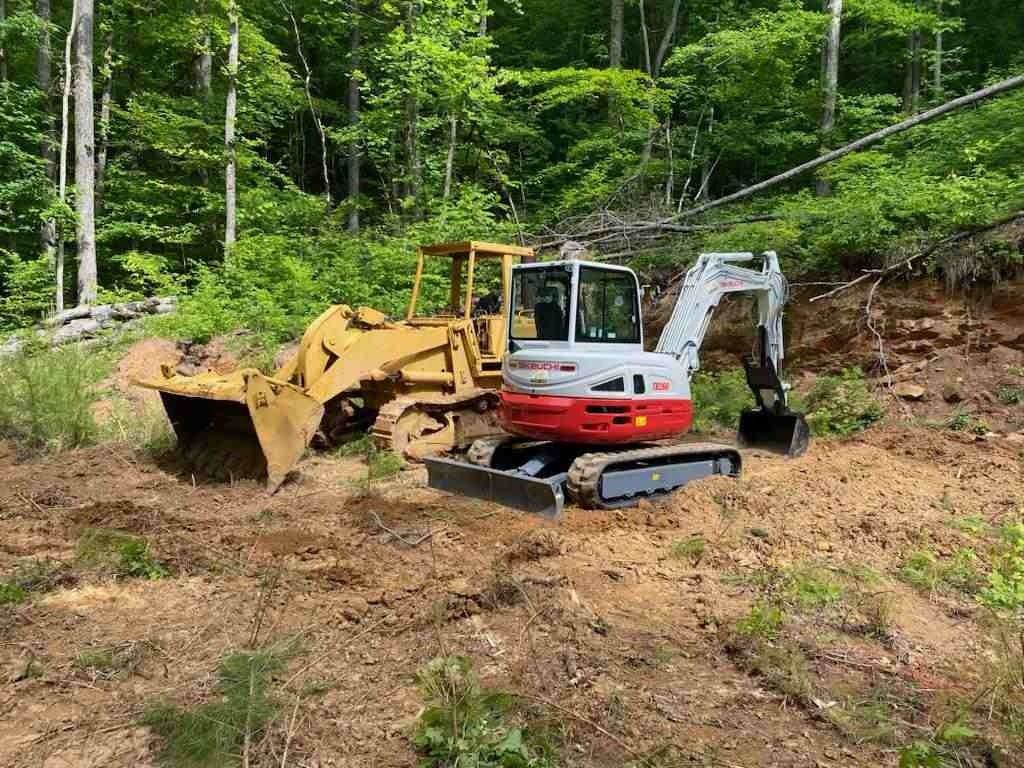
Excavation starts with locating underground utilities, marking cut boundaries, and verifying finish elevations before equipment begins removing material. Operators monitor depth continuously using grade stakes or laser systems to prevent digging below engineered specifications, which would require importing structural fill. Challenging terrain conditions throughout North Georgia, including shallow bedrock and clay hardpan layers, often require slower progress and specialized bucket teeth to break through resistant material without damaging equipment.
After excavation is complete, you see level pads ready for concrete forming, trenches sloped correctly for drainage or sewer lines, and clean sidewalls that allow inspectors to verify soil bearing capacity. Forms can be placed without additional hand digging, gravel bases can be compacted evenly, and construction schedules move forward without waiting for corrective grading. Foundation walls sit at consistent depths, septic tanks install without voids beneath them, and utility pipes maintain required slopes without low spots that trap water.
Excavation for homes differs from excavation for barns or shops because residential foundations often require deeper footings and more precise dimensional control. Mobile home pads need compacted subgrade over the entire footprint, while post-frame buildings may only need pier holes at column locations. Drainage projects involve shallow, wide cuts with specific slope percentages, and septic systems combine deep tank excavation with long, narrow drain field trenches.
Answers to Frequent Service Questions
Clients planning construction or site improvements typically ask about excavation depth limits, soil handling, and coordination with other trades.
What happens if excavation encounters rock that was not expected?
Rock requires hydraulic hammers or ripping teeth to break into movable pieces, which adds time and may require equipment changes depending on rock hardness and the depth of the rock layer.
How does excavation prepare a site for septic installation?
Excavation creates the tank hole at the depth specified by the septic designer, trenches for distribution lines at precise slopes, and access routes for delivery trucks bringing tanks and pipe materials.
When does excavated soil get hauled away versus reused on-site?
Soil is stockpiled for backfill if it is stable and free of organic material, but clay, rock, or wet soil that cannot be compacted properly is removed and replaced with engineered fill.
Why is excavation depth accuracy critical for foundation work?
Footings poured too shallow may not reach stable bearing soil or meet frost depth requirements, while footings poured too deep waste concrete and require additional forming labor to reach finished floor elevations.
What site conditions in Jasper affect excavation difficulty?
Slopes exceeding fifteen percent require benching to prevent equipment tipping, and properties with high water tables need dewatering pumps to keep excavations dry during construction.
Blackstone N Sons combines attention to detail with safety practices to deliver excavation work that supports project accuracy throughout Pickens County. Contact us to receive an excavation estimate based on your construction plans and site layout.